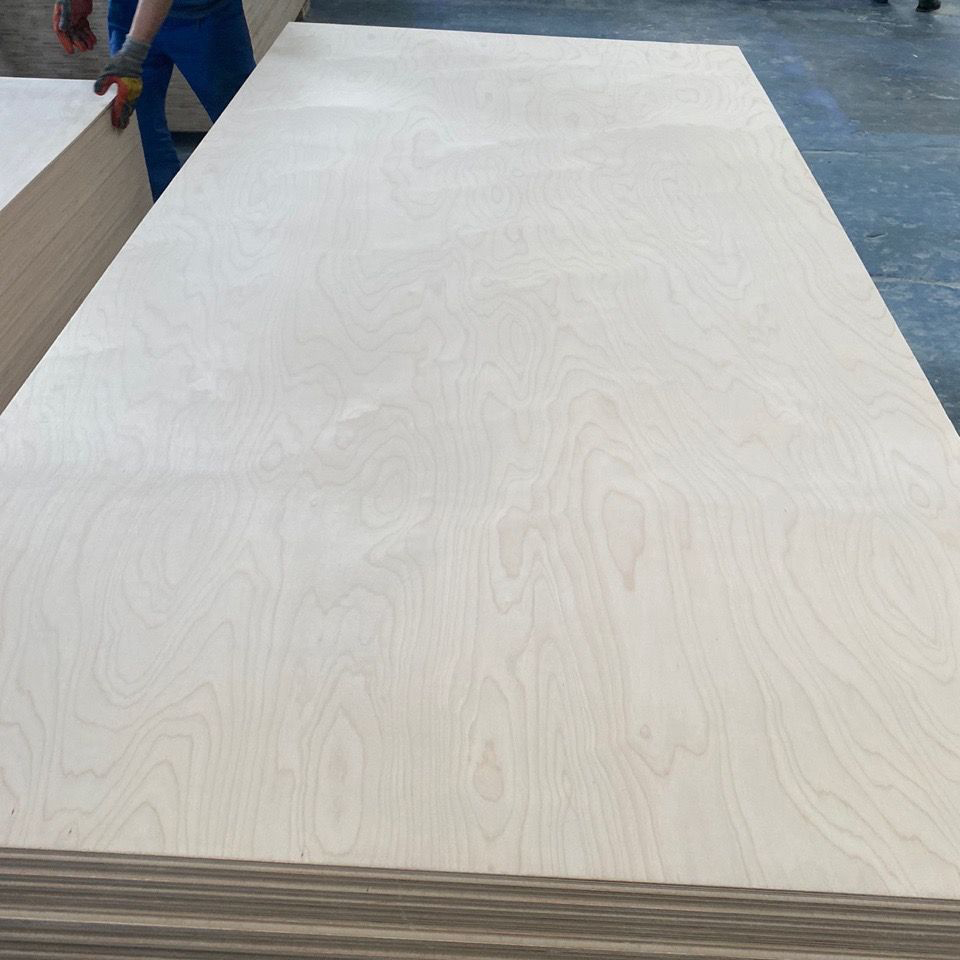
E0 Medium Density Fibreboard is an engineered wood panel made from refined wood fibres, resin and additives, with formaldehyde emissions controlled below a specified low-emission threshold. MDF normally has a density of about 600–800 kg/m³, giving it a smooth face, uniform core and predictable machining performance. The term E0 is widely used commercially, but it is not one universal international emission class. For comparison, U.S. TSCA Title VI limits standard MDF to 0.11 ppm, while the European E1 reference level has historically been 0.124 mg/m³ under a 28-day chamber test. Test method, certification and measured result should always accompany an E0 claim.
MDF is produced by breaking wood-based raw material into fine cellulosic fibres, drying the fibres, blending them with adhesive and wax, forming a mat and consolidating it under heat and pressure. Typical finished density sits around 600–800 kg/m³, although low-density and high-density grades extend beyond that range.
The fine-fibre structure separates MDF from particleboard and plywood. Particleboard uses larger discrete particles, while plywood uses bonded veneer layers. MDF distributes fibres more uniformly through the panel thickness, allowing painted doors, routed profiles and CNC-cut components to show fewer structural variations at machined edges.
Formaldehyde performance needs more explanation because an E0 label alone does not provide enough technical information. Europe has historically used E1 as a defined class: EN 13986 references a chamber concentration of no more than 0.1 ppm, equivalent to 0.124 mg/m³, after 28 days under EN 717-1 conditions.
E0 is often used by manufacturers and buyers for material with lower emissions than conventional E1 products, but its numerical definition varies among specifications and markets. A value reported in mg/L from a desiccator method cannot be compared directly with 0.11 ppm from an ASTM chamber test because the sampling conditions and reported units are different.
The United States provides a useful reference point. Under 40 CFR Part 770, MDF sold, supplied, manufactured or imported from June 1, 2018 is subject to a 0.11 ppm formaldehyde limit based on ASTM E1333-14. Thin MDF, defined by EPA guidance as MDF no thicker than 8 mm, has a 0.13 ppm limit.
| Product category | U.S. TSCA Title VI limit |
|---|---|
| Hardwood plywood | 0.05 ppm |
| Particleboard | 0.09 ppm |
| MDF | 0.11 ppm |
| Thin MDF | 0.13 ppm |
Those figures also show why buyers should not compare panel names without checking the test report. Under the same U.S. rules, ordinary MDF and thin MDF have different maximum levels, even though both belong to the MDF family. EPA states that the federal limits are identical to California CARB ATCM emission limits.
Lower-emitting resin systems can reduce emissions further. Under EPA provisions for ultra-low-emitting formaldehyde resin, one reduced-testing threshold for MDF is 0.09 ppm, compared with the general 0.11 ppm MDF limit. Qualification also requires production testing rather than a single one-off sample; EPA rules describe at least 26 quality-control tests across six months for the relevant ULEF route.
Manufacturing control therefore matters as much as resin selection. Wood species, fibre moisture, resin dosage, press temperature, press time and board density influence bonding and physical properties. Reducing adhesive without controlling the rest of the process can lower internal bond strength or create uneven density through the panel thickness.
A well-made board usually presents a flat, finely sanded face and a compact edge without large loose fibre zones. Common furniture thicknesses include 6, 9, 12, 15, 16, 18, 22 and 25 mm, while 1,220 × 2,440 mm remains a widely used commercial panel size. Other industrial dimensions are produced to reduce cutting waste on automated lines.
Thickness affects application more than the E0 label does. A 3–6 mm panel may be used for backs, drawer bottoms or decorative layers, while 15–18 mm MDF is common in cabinet bodies, shelving and furniture parts. A 22–25 mm board provides more material for deep routing, thicker doors or components requiring greater stiffness.
Density should also be read alongside thickness. At 700 kg/m³, one cubic metre of MDF has a mass of about 700 kg. An 18 mm panel measuring 1.22 × 2.44 m occupies about 0.0536 m³, so its approximate board mass at that density is around 37.5 kg before coatings, laminates or hardware are added.
That mass helps explain why MDF behaves differently from many lightweight panel products. Its uniform fibre network supports detailed CNC machining and smooth edge profiling, but large doors and wide shelves require suitable hardware, hinge selection and span design. Low formaldehyde emissions do not change those mechanical considerations.
Moisture performance is another separate specification. An E0 board is not automatically moisture-resistant. Standard MDF is generally intended for dry interior conditions, while moisture-resistant grades use different resin systems and manufacturing requirements. European MDF classifications under EN 622-5 distinguish general-purpose dry-use boards from products intended for humid conditions.
For a kitchen, vanity, retail counter or other interior area exposed to intermittent humidity, buyers may therefore specify both low formaldehyde emissions and moisture-resistant performance. Neither specification replaces the other. A board can achieve a low emission result and still show unsuitable thickness swelling after prolonged exposure to water.
Surface finishing brings another set of requirements. MDF's smooth faces can accept paint, melamine paper, veneer, laminate and decorative foil. Routed edges are more porous than factory-sanded faces, so primer or edge sealer is commonly applied before high-quality painting. Finishing quality depends on sanding, density profile and coating preparation rather than emission classification.
Machining also exposes fresh fibre surfaces and creates fine dust. Industrial cutting lines normally use local dust extraction around saws, routers and sanders. Workshop safety procedures should address airborne wood dust independently of formaldehyde certification because an E0 designation is an emission classification, not a general occupational safety rating.
When formaldehyde performance is being purchased, documentation deserves the same attention as the physical board. Under U.S. TSCA Title VI, regulated panels require third-party certification unless a defined exemption applies, and compliant panels carry information including producer identification, lot information, certifier details and a compliance statement.
EPA rules also require ongoing control rather than relying solely on an initial qualification test. Guidance describes quarterly third-party testing plus routine quality-control testing, and specified records are generally retained for 3 years. A recent laboratory report linked to the supplied product gives considerably more information than a sales sheet carrying only an “E0” logo.
A practical purchase specification can therefore include:
-
nominal density and tolerance;
-
panel thickness and dimensional tolerance;
-
formaldehyde test method and measured result;
-
applicable certification scheme;
-
internal bond and bending properties;
-
moisture content and thickness swelling;
-
surface sanding requirements;
-
moisture-resistant or fire-performance grade where required.
The formaldehyde test method should remain attached to the reported number. A 0.5 mg/L result, a 0.09 ppm result and a 0.124 mg/m³ result use different measurement frameworks. Treating them as interchangeable because the figures look similar can produce an incorrect comparison between suppliers.
European and U.S. requirements illustrate the problem. The European E1 reference cited in EN 13986 uses 0.1 ppm or 0.124 mg/m³ after a 28-day EN 717-1 chamber procedure, while U.S. TSCA Title VI specifies 0.11 ppm for MDF based on ASTM E1333-14. Different test conditions prevent simple number-for-number conversion.
Emission results also should not be treated as a direct prediction of room air concentration. EPA notes that product-emission test results cannot be converted into expected indoor concentrations without substantial additional calculations. Room volume, ventilation, temperature, humidity, exposed panel area, coatings and the number of finished products all affect actual indoor conditions.
For furniture production, machinability often matters alongside emissions. MDF has no alternating veneer grain, so router cutters encounter a relatively consistent material structure. Door profiles, grooves, letters and shaped edges can therefore be repeated accurately across large production batches, provided density, moisture and tooling remain controlled.
Screw holding requires more care, particularly near panel edges. Pre-drilling, appropriate screw geometry and adequate edge distance can reduce splitting or fibre breakout. A dense 18 mm furniture panel may perform well in cabinet construction, but designers should not assume that lower emissions increase screw withdrawal strength.
Storage conditions can affect the same panel before machining begins. MDF should normally remain flat, evenly supported and protected from liquid water. Large differences in humidity between storage and production areas can change panel moisture content, so allowing material to reach workshop conditions before precision machining can reduce dimensional variation.
Dongstar Group, a China-based TOP wood panel manufacturer and exporter founded in the 1990s in Linyi, Shandong. We supply Film Faced Plywood, Commercial & Fancy Plywood, MDF, OSB, Particle Board, Melamine Board and Formwork Systems. Our products support global construction, furniture and interior projects in 170+ countries and regions. With 30+ years of export experience, OEM/custom production and strict quality control, our products can meet ISO, CE, FSC, CARB and EUDR requirements. We also contribute to Chinese industry standards and associations.
For commercial orders, sample inspection can cover thickness, flatness, sanding, edge compactness and machining response before full-volume production. A buyer ordering 18 mm MDF, for example, can record measurements across multiple panels rather than judging one sheet, then compare the results with the stated manufacturing tolerance and technical data sheet.
Certification documents should also match the actual product family being shipped. A report for 12 mm standard MDF does not automatically establish the performance of every 18 mm moisture-resistant or fire-rated product from the same producer. Product name, plant, thickness range, resin system, test date and test method should be checked against the order.
E0 MDF is therefore best specified through measurable properties rather than the E0 name alone. Density around 600–800 kg/m³ describes the physical panel category, while emission data describes formaldehyde performance; moisture resistance, fire behaviour and mechanical strength remain separate requirements.
For a buyer comparing two apparently similar boards, a useful comparison may contain 10–15 measurable fields rather than one emission label: thickness, density, dimensional tolerance, moisture content, bending strength, internal bond, swelling, surface quality, emission method, result, certification body, lot identification and intended service condition.
The resulting specification is easier to audit across repeat orders. A board supplied in 2026 can then be compared with later production using the same test method and product criteria instead of relying on changing marketing terminology. E0 is most useful when the label is supported by a named standard, a numerical result and traceable production documentation.